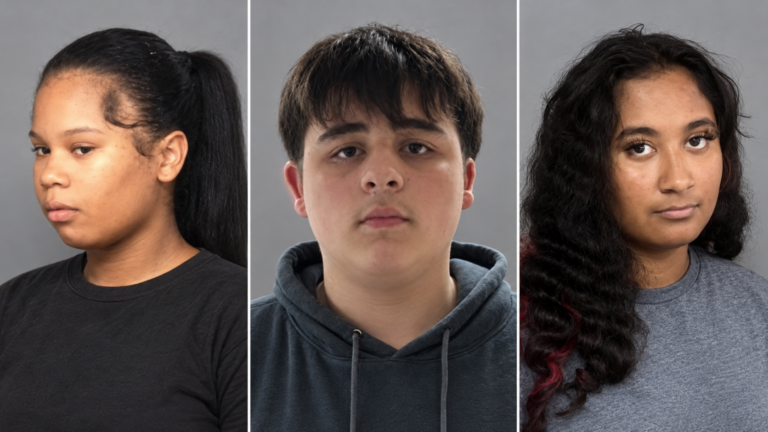
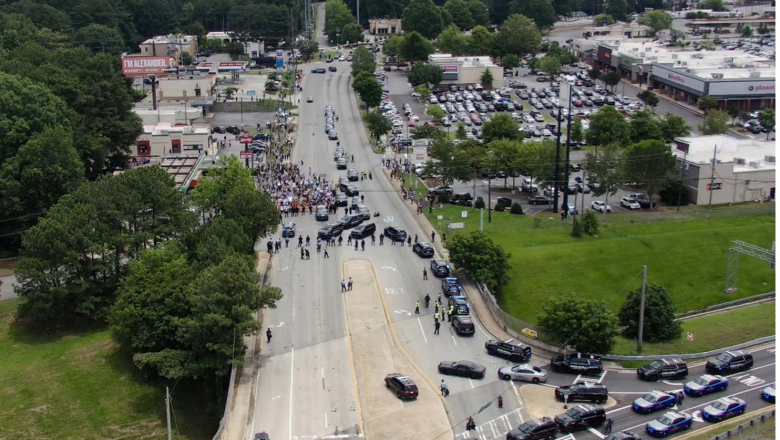
Residents now have a clearer picture of what happened during the June 14 protest at Embry Village Plaza that ended with 29 arrests, including journalist Mario Guevara.
🔍 Why It Matters: The county’s detailed timeline reveals how one of three protests that day escalated, raising questions about protest rights and police tactics in DeKalb’s diverse community.
🚨 What Happened: According to county officials, three separate protests occurred in DeKalb on June 14, but only the Embry Village Plaza demonstration led to confrontation:
Two protests on Clairmont Road and Lavista Road proceeded peacefully with police coordination.
At Embry Village Plaza, officials say protesters entered roadways and private property without prior coordination with police, leading to dispersal orders.
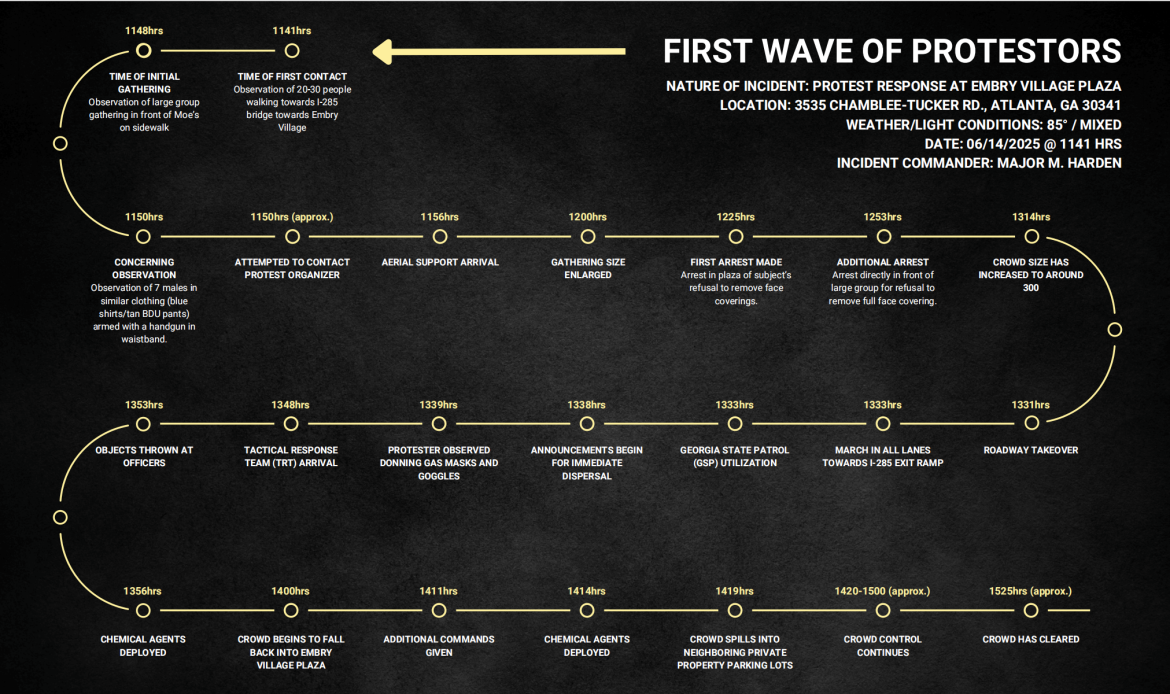
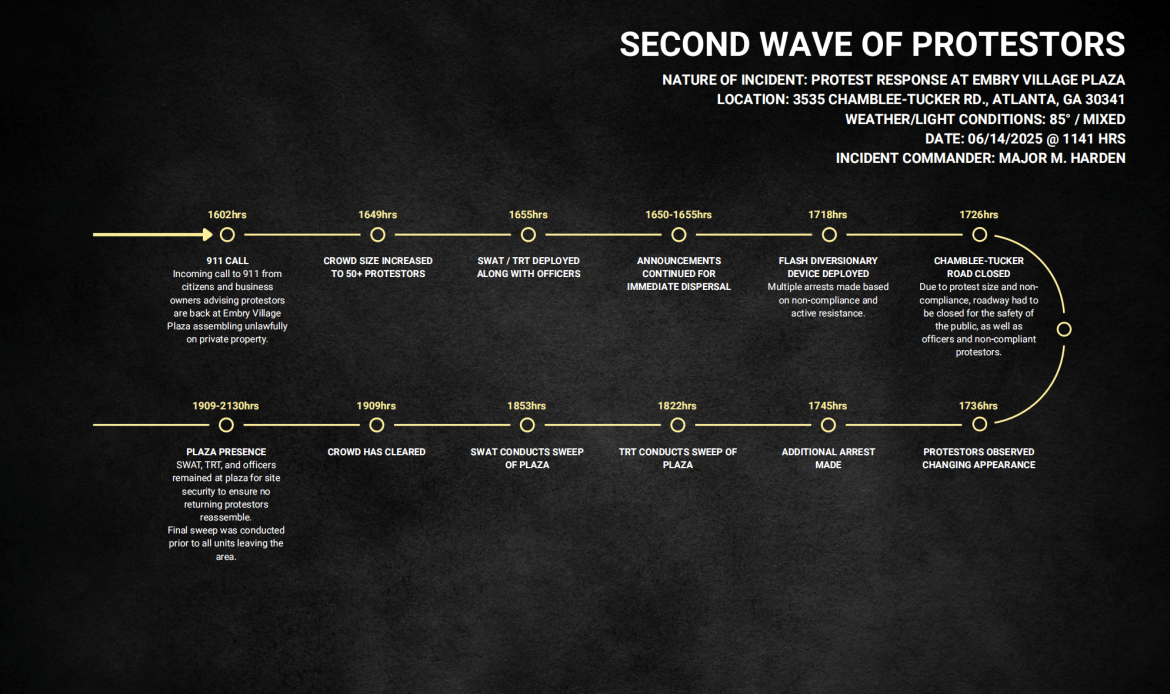
🧩 Between the Lines: The county’s timeline shows a rapid escalation:
By 1:31 PM, protesters were observed wearing gas masks and face coverings.
At 1:38 PM, police began announcing dispersal orders.
Chemical agents were deployed at 1:39 PM, with the first arrests occurring around 1:53 PM.
A second wave of protesters returned around 4:50 PM, leading to more arrests.
👮 Police Response: DeKalb activated a multi-agency response including seven law enforcement agencies:
Of the 29 arrests, 25 were made by DeKalb Police and four by Doraville Police.
Journalist Mario Guevara was arrested by Doraville officers on three charges that were later dropped by the DeKalb Solicitor General.
Guevara remains in ICE custody, though county officials note immigration matters are outside their jurisdiction.
🔄 What’s Next: The county is taking several steps following the incident:
Officials are reviewing 427 videos covering 7.5 hours of the protest.
A “Peaceful Protest Protocol” toolkit will be released June 30, including Spanish translations.
One officer’s conduct is under investigation based on video review.
The county is asking the public to share any additional footage by emailing communications@dekalbcountyga.gov.
🛑 🛑 🛑
Before You Dismiss This Article…
We live in a time when information feels overwhelming, but here’s what hasn’t changed: facts exist whether they comfort us or not.
When A&W launched their third-pound burger to compete with McDonald’s Quarter Pounder in the 1980s, it failed spectacularly. Not because it tasted worse, but because customers thought 1/3 was smaller than 1/4. If basic math can trip us up, imagine how easily we can misread complex news.
The press isn’t against you when it reports something you don’t want to hear. Reporters are thermometers, not the fever itself. They’re telling you what verified sources are saying, not taking sides. Good reporting should challenge you — that’s literally the job.
Next time a story makes you angry, pause. Ask yourself: What evidence backs this up? Am I reacting with my brain or my gut? What would actually change my mind? And most importantly, am I assuming bias just because the story doesn’t match what I hoped to hear.
Smart readers choose verified information over their own comfort zone.

B.T. Clark is the Publisher of The Georgia Sun and author of Principles Are Like Pants… You Ought to Have Some. Over two decades in journalism, he has served as Managing Editor of Neighbor Newspapers in metro Atlanta and Digital Director at Times-Journal Inc., earning multiple awards along the way. His work has appeared in newspapers across the state, including The Cherokee Tribune and The Marietta Daily Journal.
- B.T. Clark
- B.T. Clark

- B.T. Clark

- B.T. Clark