
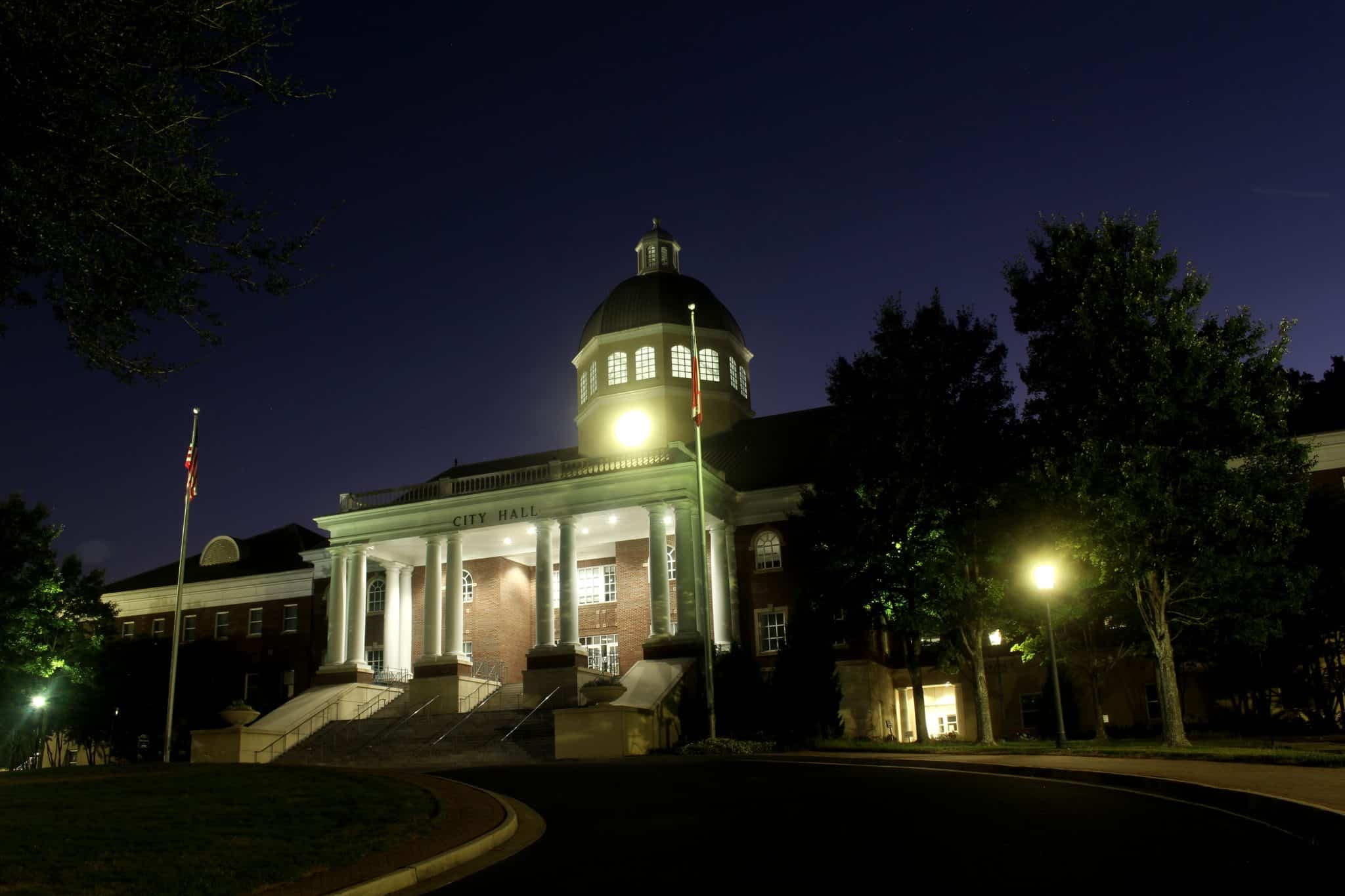
ROSWELL — For Lois Sokalo, the argument over Roswell’s property tax rate comes down to a bill she says she cannot pay.
The single senior told city leaders her home has been reassessed repeatedly since she bought it in 2009. Her city tax bill, she said, was about $500 last year. Under the original proposal, she feared it could climb to roughly $1,300, due in one payment near the end of the year.
“When that bill comes and has to be paid in December, I have no Christmas,” Sokalo said. “I’m going to lose my house because I can’t pay that.”
Her warning cut through hours of percentages, budget charts and competing explanations Monday night as Roswell residents delivered an overwhelming rejection of a proposed property tax rate of 7.732 mills.
That rate would have increased Roswell’s total millage by about 56%, from 4.949 mills in 2025. The proposal included 6.549 mills for city operations and capital improvements and 1.183 mills for debt service.
By early Tuesday morning, the original number had collapsed under public and council resistance. The City Council advanced a lower first-reading rate of 5.9 mills in a 4-2 vote, with council members Jennifer Phillippi, Sarah Beeson, Eren Brumley and Chris Zack voting in favor. Council members Christine Hall and Allen Sells opposed it.
The 5.9-mill figure remains a starting point, not the final tax rate. It would still represent an increase of roughly 19% over last year’s total rate. Council members can lower it again before final adoption, scheduled for Sept. 28.
‘You cannot be serious’
Thirty-four residents signed up to address the proposal. For more than two hours, they questioned the city’s math, its spending priorities and the speed of the process.
Some accused officials of presenting a wish list before producing a detailed 2027 budget. Others pressed the city to use reserves, reduce staffing costs, sell property, delay vehicle replacements or reconsider capital projects before turning to taxpayers.
The language ranged from technical to blunt.
“In the words of tennis great John McEnroe, you cannot be serious,” resident Jason Yao said.
Stephen Lewis called the proposal “staggering” and “unsustainable,” warning that higher costs would move through the local economy from commercial property owners to businesses, customers, landlords and renters.
“True leadership requires making tough choices, eliminating waste and optimizing current resources, not simply treating its citizens as a bottomless checking account,” Lewis said.
Several residents also objected to the absence of a completed budget showing exactly how the additional revenue would be spent. Susan Tyer distilled that concern into one sentence: “A list of items on social media does not a budget make.”
The city’s fiscal calendar complicated that argument. Roswell must set its millage rate before adopting the next budget, a sequence several council members blamed on the city’s earlier switch from a fiscal-year budget to a calendar-year budget.
Finance Director Adam Natan said the proposed rate was tied to needs identified by city departments, including road resurfacing, fleet replacement, facilities work, public safety equipment and other capital and operating expenses. One mill is expected to generate about $7.4 million in 2026.
Under the original 7.732-mill proposal, the owner of a home with a $575,000 fair market value and a $230,000 assessed value would pay about $1,778 in city property taxes before exemptions, according to the city.
But residents argued that example could not capture the pressure created by rising property assessments, grocery prices, fuel, health care and other household expenses.
“This will hurt financially the poor in our city and the elderly,” Randy Schlichting, who is also a pastor, said. “On that alone, you should reconsider.”
Former Mayor Speaks Out
Former Roswell Mayor Jere Wood, who said he has lived in the city for 77 years and spent 20 years in elected office, praised the residents who stayed through the long hearing.
“What really makes Roswell great is its citizens, and that’s been displayed here tonight,” Wood said. “You’ve gotten some good advice from these citizens.”
Then he turned directly to the divide between city staff and the public.
“I understand staff has told you that you need a 56% tax increase, but now it’s time to listen to the citizens, and they’ve told you no,” Wood said. “That’s who you work for. You’re not working for staff.”
During Wood’s years at the helm of the city, it was common for the mayor and city council to question staff recommendations, and vote against those recommendations more frequently than surrounding cities.
Residents question projections
The skepticism extended beyond the amount of the proposed increase. Residents repeatedly questioned why the city needed more money when officials recently projected 2026 revenues above budget, spending below budget and a year-end position about $5 million better than expected.
Carmel Sardone argued that Roswell holds more than $46 million in unrestricted reserves, though city officials later cautioned that the total includes the city’s required reserve, encumbered money, purchase orders and operating contingencies.
“Why can’t we use that $24 million excess reserve,” Sardone asked, “before any millage is increased?”
Robichaux points to debt and legal deadlines
Mayor Mary Robichaux used the hearing to stress two pressures facing the city: its debt obligations and the legal calendar for setting the tax rate.
Robichaux asked finance officials to detail Roswell’s outstanding debt. Natan said the city owes about $225 million in principal and another $147.6 million in remaining interest on equipment and property financing, general obligation bonds, loans, promissory notes and Public Facilities Authority revenue bonds. That figure did not include a separate parking-deck revenue bond.
Adding those obligations, Robichaux said the city would pay approximately $450 million through 2055.
She also challenged the suggestion that officials casually chose the Sept. 3 date to advertise the maximum proposed rate. Residents have pointed out that the timing of the announcement fell 12 days before elected officials would hold another public meeting where residents could address their concersn.
Robichaux said city needed enough time for required hearings, two readings and the mailing of tax bills before the end of the calendar year, she said.
“Because of state requirements by law,” Robichaux said, the city had to advertise “the possible highest rate” before it had received the final Fulton County tax digest.
That explanation did little to rescue the 7.732-mill proposal.
Council member Sells moved to retain the existing 4.049-mill operating rate while increasing the debt-service portion to 1.183 mills, for a total rate of 5.232 mills. Hall supported him, but the motion failed 2-4.
Beeson then moved to advance the full 7.732 mills, saying the council would continue negotiating it downward. That motion also failed.
Phillippi offered the compromise that survived: 5.9 mills, including debt service. She said she expected the final rate could fall lower but was unwilling to commit to the 5.232-mill alternative before receiving more information.
“I do hope a millage comes in lower than what I’m about to propose,” Phillippi said.
The city will hold a town hall from 6 to 7:30 p.m. Wednesday, Sept. 16, at Eagles Nest Church. Another hearing is scheduled for 6 p.m. Sept. 21, followed by the second reading and expected adoption Sept. 28.
The original 56% increase is no longer the number moving forward. The anger that killed it, however, has not gone anywhere.

B.T. Clark is the Publisher of The Georgia Sun and author of Principles Are Like Pants… You Ought to Have Some. Over two decades in journalism, he has served as Managing Editor of Neighbor Newspapers in metro Atlanta and Digital Director at Times-Journal Inc., earning multiple awards along the way. His work has appeared in newspapers across the state, including The Cherokee Tribune and The Marietta Daily Journal.
- B.T. Clark

- B.T. Clark

- B.T. Clark

- B.T. Clark