

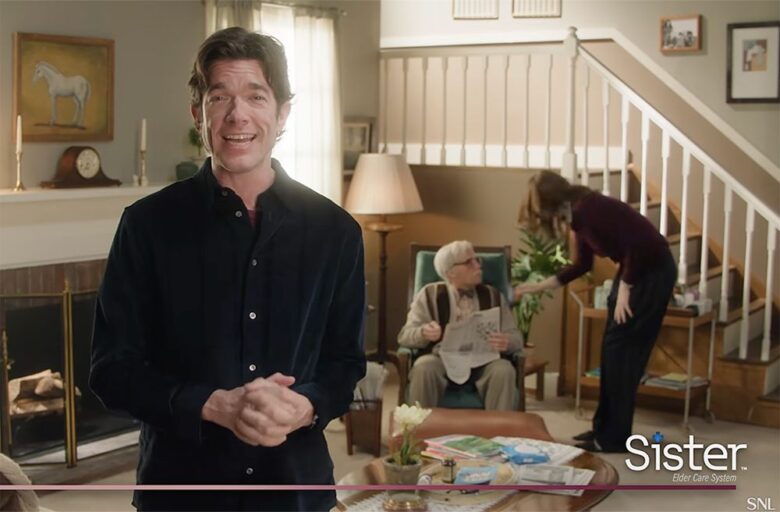
A viral Saturday Night Live sketch has brought America’s growing caregiving crisis into sharp focus, highlighting how the responsibility for looking after ageing parents so often falls disproportionately on daughters. The skit, titled “Sister,” struck a chord with viewers by satirizing the expectation that women will sacrifice their own time, careers and personal lives to care for elderly relatives.
But behind the comedy lies a serious problem for families across the country, including in Georgia, where the supply of professional home-care workers is struggling to keep pace with demand. As the state’s population ages, finding reliable help for older and vulnerable residents is becoming increasingly difficult.
One company hoping to help address the problem is Roost, a home-care business led by CEO Alex Moran. It is planning to launch Roost Academy, a training initiative designed to recruit people interested in caregiving, prepare them for their first assignments and give them opportunities to develop specialist skills and build longer-term careers in the sector.
“Georgia is running out of caregivers just as more families need one. By 2032 the state needs to fill an estimated 136,400 direct-care jobs. That gap won’t close by itself. Someone has to build the workforce, and Roost intends to,” Moran said.
Research by PHI, a national organization focused on the direct-care workforce, estimates that Georgia will have 136,400 direct-care job openings between 2022 and 2032. The figure includes positions created through rising demand as well as jobs that need to be filled when existing workers leave the profession. Georgia had approximately 81,450 direct-care workers in 2023, including personal-care aides, home-health aides and nursing assistants.
The shortage affects both urban and rural communities, but the challenges can be particularly acute outside the major population centers. Atlanta and its surrounding metropolitan area account for a large concentration of older residents, while rural communities often have fewer potential caregivers spread across much larger geographical areas.
A 2025 report by a Georgia Senate study committee found that 19% of the population in rural Georgia is already aged 65 or older, compared with 14.6% statewide. That rural proportion is projected to rise to 22% by 2030. The report also found that 94 of the state’s 100 oldest counties are rural.
Moran believes that improving the career prospects of caregivers is essential if Georgia is to recruit and retain enough people to meet the growing demand.
“Caregivers leave because the job is undervalued and there’s nowhere to go from it. Fix that and people stay,” he said.
Roost Academy is intended to address that issue by providing training before caregivers make their first home visit, followed by opportunities to develop specialist expertise in areas such as dementia care and end-of-life support. The aim is to create a progression route rather than simply offer a one-off training course.
“Roost Academy takes someone curious about caregiving and makes them a professional. They get trained before their first visit, then move into specialist skills like dementia and end-of-life care, and on from there. It’s a career path, not a course,” Moran said.
The consequences of the shortage extend far beyond the home-care industry. When families cannot find or afford reliable professional help, relatives are often left to fill the gap themselves. For many, that means taking on increasingly demanding caring responsibilities alongside jobs, children and other family commitments.
The SNL sketch resonated because it reflected a reality experienced by millions of families: the assumption that someone, often a daughter, will simply step in when an ageing parent needs help. Moran argues that the solution must involve making professional care more accessible while building a stronger workforce.
“Every unfilled shift is a parent left without help at home. This isn’t an HR problem. It’s a community problem, and it lands on the most vulnerable people we have,” he added.
For Roost (www.roost.us), the proposed Academy represents an attempt to tackle the shortage at its source by creating a more sustainable supply of trained workers. The company also aims to match families with appropriate caregivers and provide greater consistency in the care they receive.
“We don’t wait for caregivers to turn up. We make them. That’s how we answer the shortage: we train people, we invest in them and we give them a reason to stay,” Moran said.
With Georgia’s ageing population increasing pressure on home-care services, initiatives that attract new people into the profession and give them reasons to stay could become an increasingly important part of the solution. The challenge now is ensuring that families have access to the help they need, rather than being left to manage the crisis alone.

B.T. Clark is the Publisher of The Georgia Sun and author of Principles Are Like Pants… You Ought to Have Some. Over two decades in journalism, he has served as Managing Editor of Neighbor Newspapers in metro Atlanta and Digital Director at Times-Journal Inc., earning multiple awards along the way. His work has appeared in newspapers across the state, including The Cherokee Tribune and The Marietta Daily Journal.
- B.T. Clark

- B.T. Clark

- B.T. Clark

- B.T. Clark