

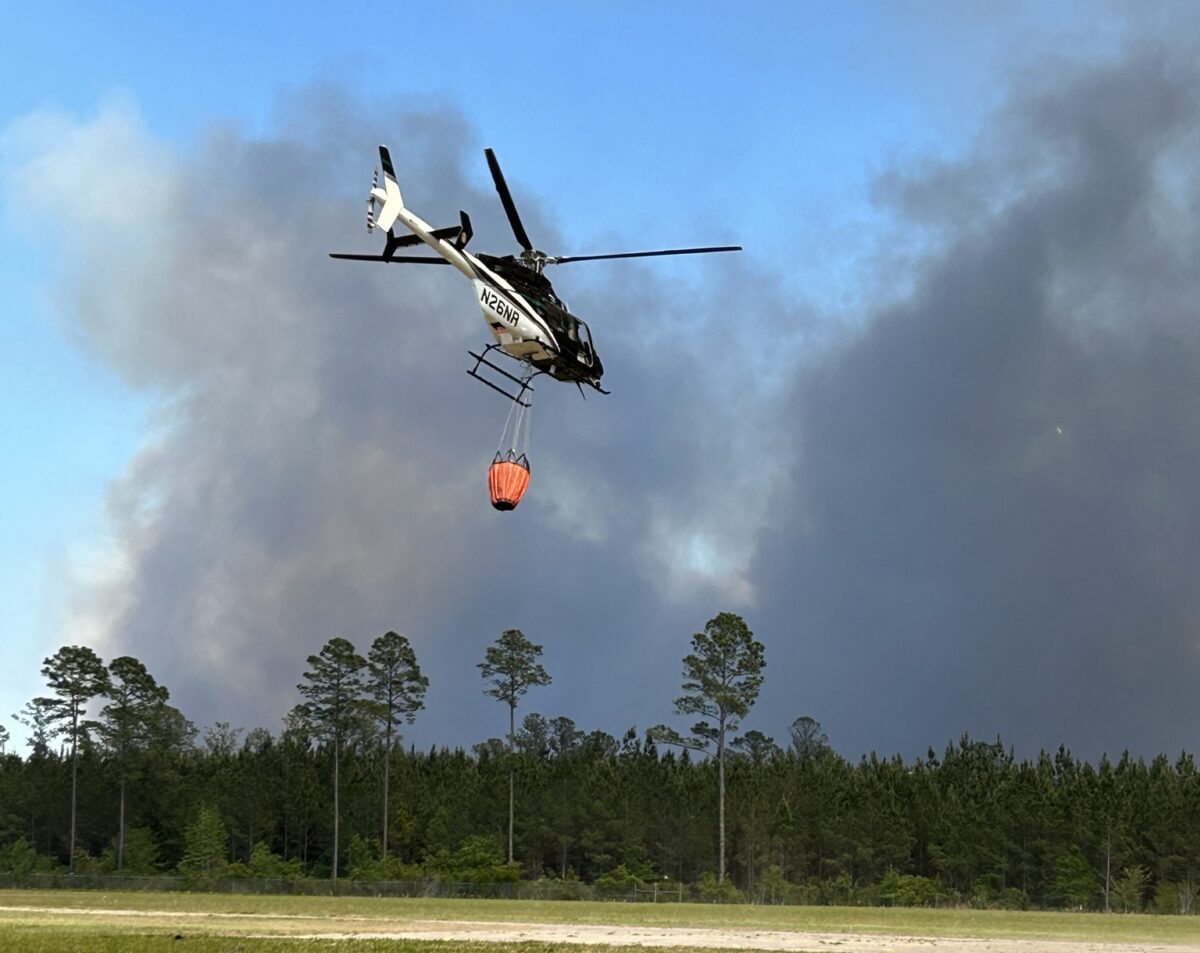
A legally enforced no-fly zone is active around the clock over Georgia’s wildfire areas, and officials say drones in that airspace are forcing firefighting planes and helicopters to stand down.
What’s happening: The Georgia Forestry Commission says a Temporary Flight Restriction — a government-ordered no-fly zone — is in effect 24 hours a day over active fire areas. When a drone enters that airspace, firefighting aircraft may be ordered out of the area or blocked from launching at all.
What’s important: Flying a drone inside a Temporary Flight Restriction zone is illegal. Officials say it directly delays fire suppression and puts firefighters, nearby residents, and property at greater risk.
How this affects real people: Every minute a firefighting aircraft sits on the ground because of a drone is time the fire has to grow. For people in the path of active fires, those delays are not abstract — they are the difference between a fire that gets contained and one that reaches homes.
Catch up quick: Georgia is in the middle of a major wildfire emergency. Gov. Brian Kemp declared a state of emergency covering 91 of the state’s 159 counties. Wildfires this year have already surpassed the state’s five-year average, driven by an extended drought. Two fires — the Pineland Road fire in Clinch and Echols Counties and the Highway 82 fire in Brantley County — have burned more than 11,085 acres and threatened more than 1,050 homes and 50 businesses across three counties.
The path forward: The flight restriction remains in effect with no end date announced. Officials are asking the public to stay out of restricted airspace entirely and allow crews to work without interruption.
- Wildfire breaks out in Effingham County
- Georgia is Literally on Fire. Did You Notice?
- <span style="display:inline-block;width:96px;height:64px;border-radius:4px;flex-shrink:0;background:#1a1a1a;border:2px solid #06b6d4;margin-right:10px;vertical-align:middle;"></span>Cherokee
- Highway 82 in Brantley County, but Highway 110 stays closed due to wildfire
- Georgia officials to curious residents: Don’t fly drones over wildfires