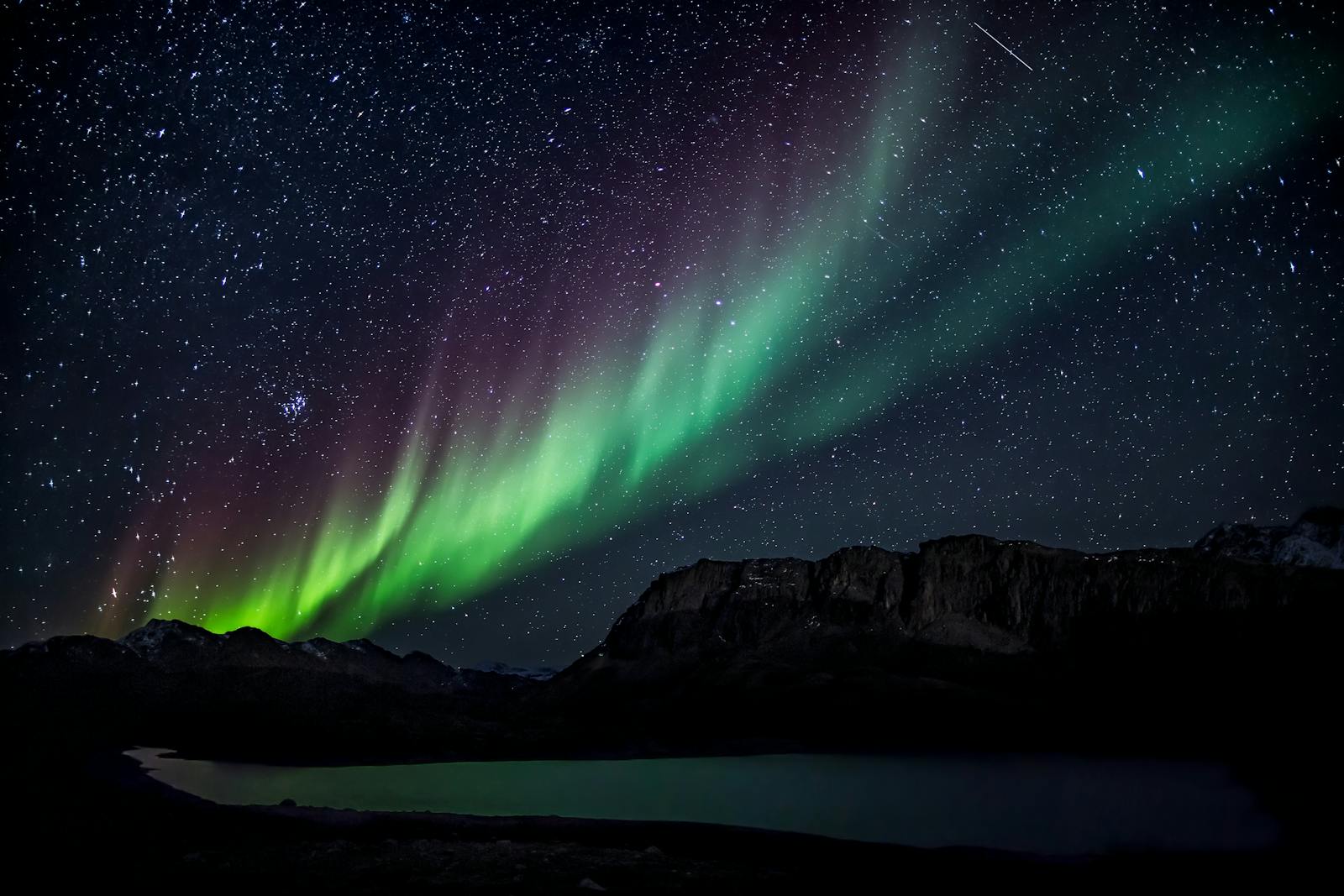

Georgia residents might catch a rare glimpse of the northern lights tonight. The solar flare that erupted Friday has triggered a powerful geomagnetic storm heading our way.
🌠 Why It Matters: This unusual celestial event could bring the aurora borealis much farther south than normal, giving Georgians a rare opportunity to witness a phenomenon typically only visible in northern regions.
🌌 What’s Happening: A G4 level geomagnetic storm (the second-strongest classification) is currently affecting Earth after a solar flare sent energy directly toward our planet.
- The storm has already made northern lights visible as far south as New Mexico.
- Scientists predict the storm will maintain its G4 strength through tonight.
⏰ Best Viewing Time: The peak viewing window is expected between 11 p.m. Sunday and 2 a.m. Monday, according to current forecasts from space weather experts.
🔭 Viewing Tips: Your location will dramatically impact your chances of seeing the aurora.
- Rural areas away from city lights offer the best visibility.
- Though the lights will be nearly invisible to the naked eye, phone cameras might be able to capture the lights in darker areas.
- City dwellers may need to travel to darker locations for any chance of viewing.
🌍 The Big Picture: While there’s no guarantee Georgia will see the lights, this storm represents a rare southern extension of aurora visibility. If the storm intensifies to G5 level, visibility would significantly improve across the region.
🛑 🛑 🛑
Before You Dismiss This Article…
We live in a time when information feels overwhelming, but here’s what hasn’t changed: facts exist whether they comfort us or not.
When A&W launched their third-pound burger to compete with McDonald’s Quarter Pounder in the 1980s, it failed spectacularly. Not because it tasted worse, but because customers thought 1/3 was smaller than 1/4. If basic math can trip us up, imagine how easily we can misread complex news.
The press isn’t against you when it reports something you don’t want to hear. Reporters are thermometers, not the fever itself. They’re telling you what verified sources are saying, not taking sides. Good reporting should challenge you — that’s literally the job.
Next time a story makes you angry, pause. Ask yourself: What evidence backs this up? Am I reacting with my brain or my gut? What would actually change my mind? And most importantly, am I assuming bias just because the story doesn’t match what I hoped to hear.
Smart readers choose verified information over their own comfort zone.