
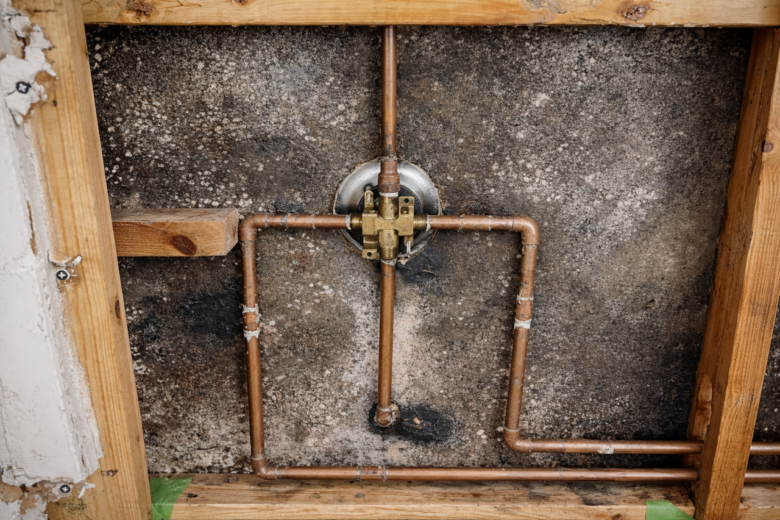
A wet, sweltering summer is pushing moisture up through metro Atlanta homes. For thousands of families, the problem starts in a space they never see.
ATLANTA. The heat arrived early this summer, and so did the rain. After a soggy June and a July that has kept humidity hovering near 75 percent most days, homeowners across metro Atlanta are dealing with a familiar list of complaints: air conditioners that run all day without ever feeling like they catch up, a faint musty smell that shows up on the worst afternoons, and allergy symptoms that get worse indoors instead of better.
For a growing number of local families, those symptoms trace back to a part of the house almost no one thinks about until something goes wrong. The crawlspace.
Roughly one in seven homes in the United States sits over a crawlspace foundation, and that share climbs sharply across the humid Southeast, where warm ground and heavy clay soil have made the design a regional standard for generations. In and around Atlanta, where a large portion of the older housing stock was built over open, vented crawlspaces with bare dirt floors, the number of affected homes runs well into the hundreds of thousands.
And the conditions this July are close to ideal for mold. The Environmental Protection Agency warns that mold can take hold on damp materials in as little as 24 to 48 hours, and that indoor humidity should be kept below 60 percent to keep it from growing. In an open Atlanta crawlspace during a rainy July, humidity routinely sits far above that line.
A microscopic problem that does not stay put
The reason crawlspace mold matters to the people living upstairs comes down to physics. Warm air rises and escapes through the upper levels of a house, which pulls replacement air in from the lowest point, the crawlspace, through gaps around pipes, wiring, ductwork, and the seams in the subfloor. Building-science researchers estimate that up to half of the air on a home’s main floor started in the crawlspace beneath it.
“People picture mold as something you can see on a wall, so they assume that if the living room looks clean, the house is clean,” said Jamal Andrews, general manager of Claro Complete Mold Remediation in North Atlanta. “But mold spores are microscopic. They ride the air currents straight up through the floor. You can have a spotless kitchen sitting on top of a crawlspace that’s quietly feeding spores into every room, and the family upstairs just knows they don’t feel right at home.”
The moisture driving that growth, Andrews said, is stubborn in a way many homeowners do not expect. Atlanta’s clay-heavy soil holds water long after a storm passes, and that water evaporates upward into the crawlspace continuously.
“This is the part that surprises people,” Andrews said. “Even with good gutters and perfect drainage, the ground itself is still giving off moisture. Bare dirt in a crawlspace is basically an open reservoir. It slows down in a dry stretch, but it never really stops. You cannot out-drain the earth.”
Why drainage alone will not fix it
That is why, according to Andrews, the fix for a mold problem tied to crawlspace water is rarely as simple as improving the grading outside or running a fan.
Correcting drainage and any active leaks is a necessary first step, he said, but the vapor rising off open soil has to be physically sealed out. That is the job of crawlspace encapsulation, which lines the floor and foundation walls with a heavy-duty vapor barrier, seals off the vents that let humid outside air back in, and adds a commercial dehumidifier sized to hold the space below the level where mold can grow.
“Encapsulation is what actually breaks the cycle,” Andrews said. “Until you put a real barrier between the wet ground and the wood, you’re just cleaning up the same problem every year.”
Claro’s approach to crawlspace mold removal treats the space as a complete job rather than a spray-and-go visit. The company starts by finding the actual source of the moisture, whether that is drainage, a plumbing leak, poor ventilation, or vapor coming off bare soil, and corrects it first. Contaminated insulation and materials that cannot be saved are removed and the space is dried. Only then does the company apply its patented dry fog as a finishing step, treating the surfaces, joist cavities, and air pockets that hands and rags cannot reach. Every project ends with a retest to confirm the result, backed by a one-year guarantee.
“The fog is a powerful finish, but it’s a finish, not a shortcut,” Andrews said. “If you fog a crawlspace without fixing the water first, you’ve done nothing but buy yourself a few months. We do it in the right order because that’s the only order that lasts.”
What families notice afterward
For the homeowners who go through it, the change tends to show up in the way the house feels. One recent Buckhead-area client, whose team installed a new dehumidifier and brought her home’s runaway humidity back under control, described the difference simply in a review: the whole home even smells fresh now.
Others point to the reason they called in the first place. “Their expertise, customer service, and genuinely caring about the health and safety of our family is unmatched,” wrote Ricci Taylor, another Atlanta customer, in a five-star review. A third homeowner called Claro after catching a small leak early, hoping to head off a bigger problem before it started, exactly the timing Andrews recommends.
His advice for Atlanta homeowners this summer is to pay attention to the quiet signals: a musty smell that will not clear no matter how much you air the house out, indoor humidity that stays high while the AC runs nonstop, floors that feel soft or springy underfoot, and energy bills climbing for no obvious reason. Any one of them, he said, is worth a look underneath the house.
“Catching it early is everything,” Andrews said. “The family that calls when they notice the smell is in a much better spot than the one who waits until the floor starts to go. Under a floor is the last place anyone wants to think about, but in a July like this one, it’s the first place I’d look.”
Claro Complete Mold Remediation offers free crawlspace inspections across Fulton County and the greater Atlanta area and can be reached at (404) 495-3802.