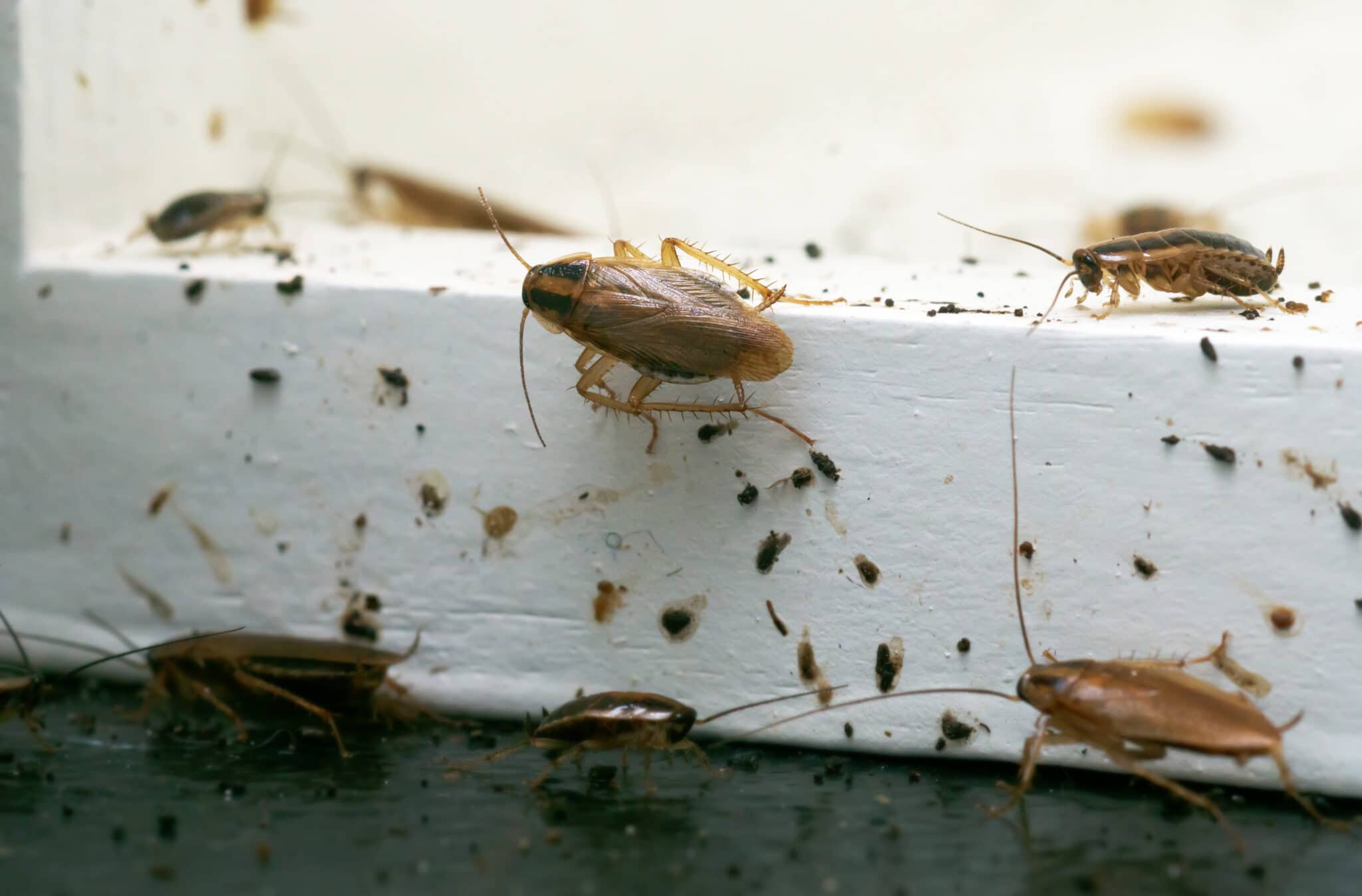
A Peachtree City Japanese steakhouse is facing a follow-up inspection later this month after a state health inspector found dozens of live roaches crawling through the kitchen, on the ice machine, inside refrigerators, and across the sushi bar during a routine visit earlier this month.
Mr. Fuji Japanese Steakhouse, located at 1204 N. Peachtree Pkwy., scored an 18 out of 100 on a June 5 inspection conducted by state inspectors. The restaurant has until June 26 to address the violations before a follow-up inspection.
Live roaches found throughout the facility
The most serious finding of the inspection was a widespread roach infestation. Inspectors documented dozens of live roaches crawling on and into the ice machine, on the hand sink in the kitchen, inside refrigeration units in both the main kitchen and front-of-house area, on counters in the front-of-house area, under preparation sinks, under the cooler in the rear of the kitchen, and under the counter at the sushi bar. Turner noted she had to use a flashlight to see in parts of the kitchen because multiple lights were burned out.
The restaurant also had residential pesticides stored in the kitchen in contact with onions. The onions were discarded and the pesticides were removed during the inspection.
Food safety violations
Inspectors found a long list of food safety violations, several of them among the most serious category of health code infractions.
Raw chicken was stored over cooked rice and ginger in the walk-in cooler. Raw beef was stored with cooked rice in a lobby freezer. Raw eggs were stored over avocados. Raw fish was stored over ginger. Unwashed vegetables were stored alongside washed produce. All items were rearranged during the inspection.
Cold foods were found stored above the required 41 degrees, and hot foods were found stored below the required 135 degrees. Both violations were corrected during the inspection, with the items discarded.
The facility was also attempting to cool rice improperly. After one hour, the rice had only dropped from 135 degrees to 123 degrees. State code requires food to cool from 135 degrees to 70 degrees within two hours. The rice was discarded.
The restaurant sells raw and undercooked fish in its sushi but could not produce documentation from its supplier confirming parasite control methods for fish served before June 2. State code requires those records to be kept for 90 days beyond when the items were served.
The facility also had a written plan to use time rather than temperature to control the safety of its sushi rice, but inspector Turner found the plan had not been followed and that time had not been tracked since May 28.
Handwashing and hygiene failures
Inspector Turner documented multiple handwashing failures during the visit.
One employee who had been washing dishes ran their hands briefly under water and then went directly to handling food, including ice and rice, without properly washing their hands. Another employee handled a wiping cloth that had been used on a cutting board with raw chicken on it and then moved to new food items without washing their hands. Both employees washed their hands properly after being directed to do so by the inspector.
The hand sink in the front food service area had no soap. A pitcher was found stored inside the hand sink in the front-of-house area. Employees were also observed attempting to wash wiping cloths in the hand sink in the main kitchen. The hand sink in the waiter area had no cold water, making it impossible to properly temper the water temperature for handwashing.
Cross-contamination and labeling concerns
A knife used on raw chicken was rinsed in the three-compartment sink but not sanitized before being used on other food items. The knife was properly washed, rinsed, and sanitized after the inspector intervened.
Raw shrimp was stored in direct contact with undrained ice. The shrimp was moved to a perforated pan during the inspection.
Raw fish was found thawing in containers left sitting in the front food service area rather than under refrigeration or cold running water. The fish was placed into refrigeration during the inspection.
None of the temperature-controlled food in the facility that had been prepared more than 24 hours earlier was date marked. Items with known preparation dates were labeled during the inspection, and all others were discarded.
The restaurant’s menu was missing the required asterisks and descriptions identifying raw food items, and the facility lacked a written allergen disclosure listing the major food allergens used in its dishes. The allergen disclosure violation was noted as a repeat.
Facility conditions
Inspector Turner found heavy accumulations of grease, debris, and food on shelves, inside reach-in coolers, and on floors and walls throughout the kitchen, front-of-house area, and sushi bar. The floor and wall accumulation violation was noted as a repeat.
Food containers were found stored directly on the floor of the walk-in cooler and in the main food area. Food was also stored next to a hand sink in the sushi area that lacked a splash guard. That violation was also a repeat.
Employee drinks in reusable cups, some without lids or straws, were found stored over food and clean utensils throughout the kitchen, sushi area, and front-of-house area. Employee food was found stored above food intended for customers in the walk-in cooler. All items were removed during the inspection.
Employee personal belongings, including phones, backpacks, and jackets, were stored with and above food and food contact surfaces. That violation was also a repeat.
Several coolers in the main kitchen had damaged or missing door gaskets. Sinks in the main kitchen were not properly sealed to the wall. The facility was also using unsealed wood as a non-food contact surface. Preparation sinks had leaky faucets. One dumpster was missing a drain plug. The rear exterior door did not close tightly enough to prevent pest entry.
Not all reach-in units in the front-of-house area and main kitchen had thermometers inside them. Plates stored near the rear of the lobby were stored upright without overhead protection, a repeat violation. In-use utensils were found stored in stagnant, room-temperature water measuring 75 degrees. The utensils were moved during the inspection.
The facility’s most recent inspection report was posted near the ceiling in a corner where it was not easily visible. State code requires the report to be posted within 15 feet of the front door, between 5 and 7 feet from the floor, and in a location where it can be read from one foot away.
The person in charge at the time of the inspection was found to not be exercising adequate oversight of food safety practices, including temperature control, cooling, thawing, and chemical storage. That violation was not corrected during the inspection.

B.T. Clark is the Publisher of The Georgia Sun and author of Principles Are Like Pants… You Ought to Have Some. Over two decades in journalism, he has served as Managing Editor of Neighbor Newspapers in metro Atlanta and Digital Director at Times-Journal Inc., earning multiple awards along the way. His work has appeared in newspapers across the state, including The Cherokee Tribune and The Marietta Daily Journal.
- B.T. Clark

- B.T. Clark

- B.T. Clark

- B.T. Clark