
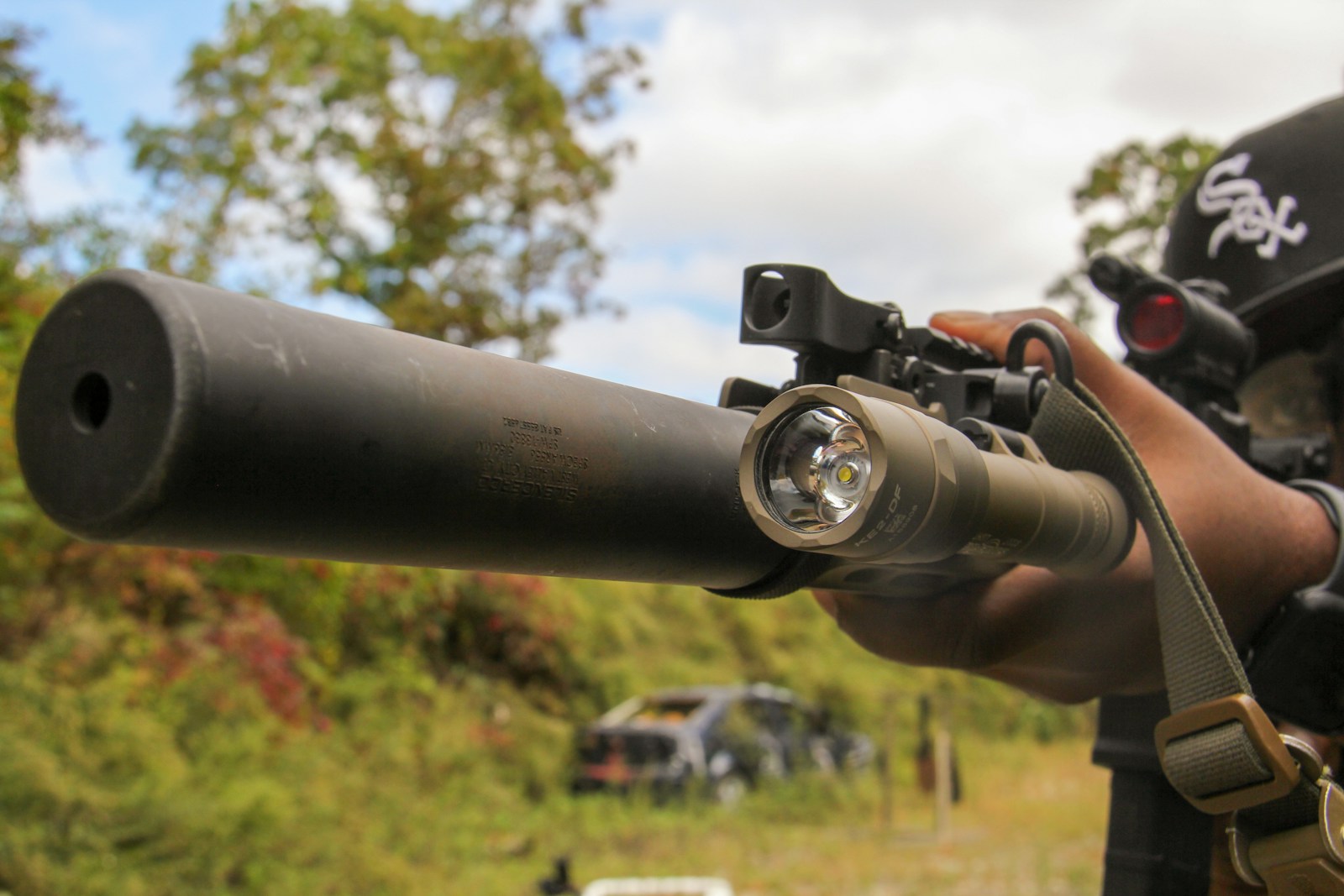

Georgia has some of the loosest gun laws in the nation, but a bill to remove the state’s restriction on silencers tested lawmakers’ limits.
The gun silencer bill fell four votes short in the House on Friday, a rare defeat for pro-gun proposals in Georgia.
Other bills that expand protections for gun owners advanced, including legislation strengthening Georgia’s “stand your ground” law and a measure banning cities from passing local gun storage laws.
Meanwhile, a proposal to provide Georgians a tax credit worth up to $300 for the purchase of gun safes stalled in the Senate this year. The latest version of House Bill 79 creates a tax holiday for the purchase of firearms and only allows the tax credit to pay for gun safety classes, not for gun safes.
“They’re very much ignoring the problem” of gun violence, said Heather Hallett, director for Georgia Majority for Gun Safety. “They haven’t adjusted to this reality where we know the majority of people support our principles. They can vote on gun safety.”
Georgia Majority for Gun Safety supports universal background checks for gun purchases, secure storage requirements, red flag laws that take guns from those whom a judge deems to be a threat, and funding for secure storage education.
Gun rights advocates said they’re disappointed the bill lifting Georgia’s limits on silencers fell short in the House. A similar bill passed the Senate.
State law bans possessing silencers unless Georgians pass a federal background check.
James Rankhorn, president of the gun rights group GA2A, said if the courts rule the federal requirement is illegal, silencers would then become prohibited for everyone in Georgia.
Rankhorn said lawmakers shouldn’t try to restrict firearms or silencers to address gun violence, including school shootings such as the killing of two students and two teachers at Apalachee High School in Barrow County in 2024.
“I don’t think there is an answer in state law. Anytime there’s a catastrophe, people bounce these proposals around,” Rankhorn said. “When you look at the situation and look at the law they proposed and compare it to the event that sparked the discussion, they law they proposed would not have stopped the incident.”
A jury found the Colin Gray, the father of the teenager accused of the Apalachee school shooting, guilty last week of second-degree murder and several other crimes.
Gray said he bought his son the rifle used in the shooting for Christmas, and witnesses in the trial said he allowed his son to keep the rifle in his bedroom. Prosecutors said Gray ignored years of warnings from mental health professionals, the kind of concerns that gun safety advocates say could have triggered a “red flag” law if Georgia had one.
Rep. Michelle Au, D-Johns Creek, said in the House on Friday she resented that Georgia legislators were seriously considering a bill to loosen restrictions on gun silencers.
“A gunshot is loud by design, and that sound is not just a fun noise, right? It’s a critical warning sign that alerts people nearby that something is wrong. It prompts witnesses to call 911, it prompts bystanders to run away, it helps police to identify the location of a threat,” Au said of House Bill 1324. “I cannot believe how stupid it is that I need to make these points.”
Sen. Frank Ginn, R-Danielsville, said silencers help hunters without disturbing animals as much, and they stifle noise that leads to hearing loss. He said Senate Bill 499 would safeguard the ability of law-abiding gun owners to continue using silencers.
“It makes sure that the 270,000 folks in Georgia who have a silencer will be able to keep that, regardless of what changes in federal law,” Ginn said.
Although SB 499 passed the Senate, its prospects are uncertain after the House rejected its own silencer legislation, with Democrats opposed and numerous Republicans skipping the vote.
Everytown for Gun Safety, a pro-gun control group, ranked Georgia as having the 44th-weakest gun safety laws in the United States.
In the wake of the Apalachee shooting, the General Assembly approved a bill last year that requires public school districts to identify and mitigate potential threats from students, implement panic alert systems, and create student behavioral health plans.