

Georgia’s 2020 presidential election results are again under scrutiny after Fulton County officials acknowledged a paperwork failure involving vote tabulator tapes. The issue has fueled online claims that hundreds of thousands of votes were illegal. State officials say the claims misunderstand how Georgia elections work.
What’s Happening: Fulton County told the State Election Board that required signatures were missing from some tabulator receipt tapes tied to about 315,000 early votes cast in the 2020 election. The county said the votes themselves were properly cast and counted, but documentation rules were not followed.
What’s Important: Georgia’s voting system is built on paper ballots that are verified by voters and preserved for recounts. The unsigned tapes did not change or invalidate those ballots.
How Georgia Voting Actually Works: Georgia does not use voting machines that store votes electronically in the traditional sense.
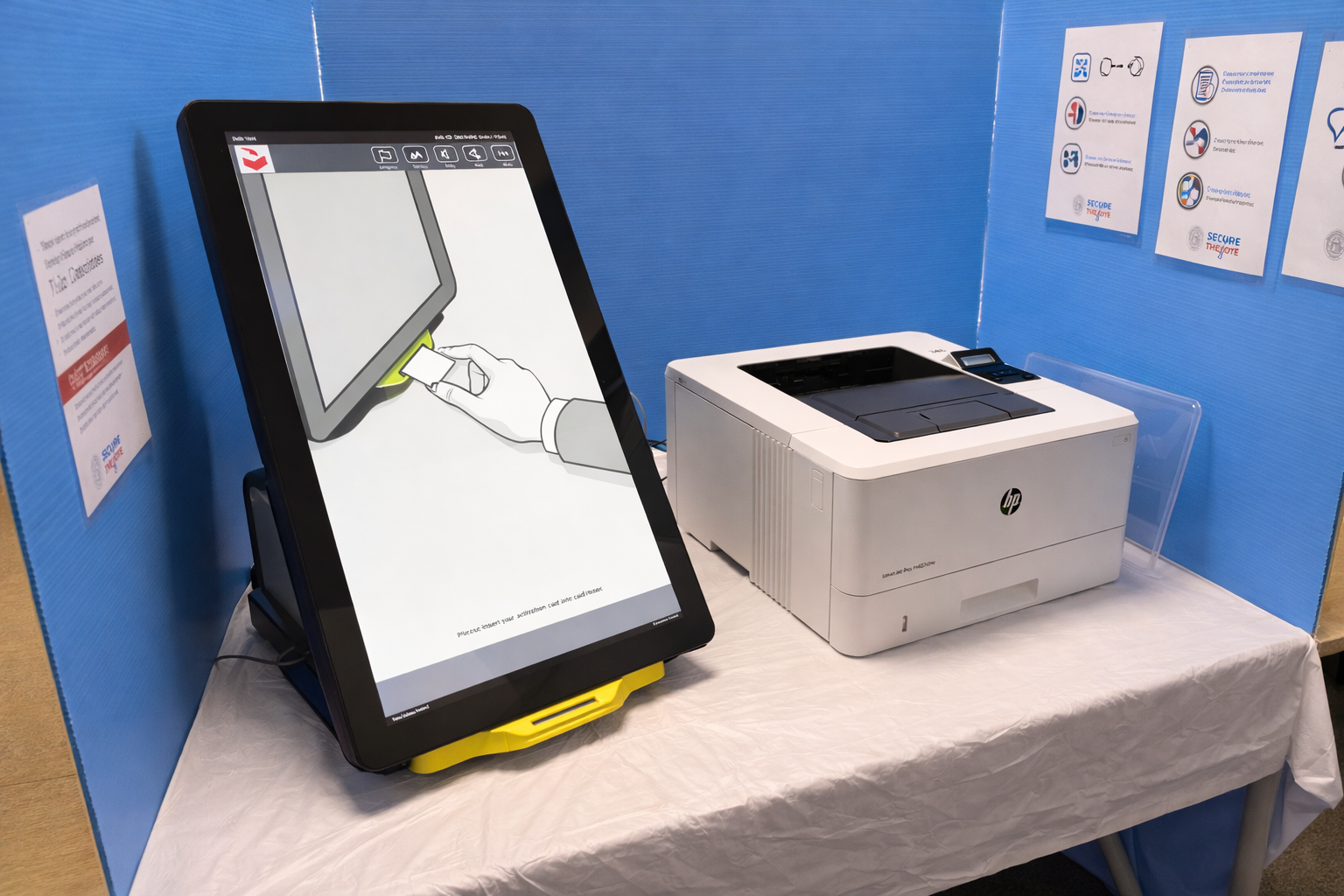
When a voter enters a booth, they use a ballot marking device. This device displays the ballot on a screen and allows the voter to make selections. The device does not record votes. It functions like a tool to mark a ballot.
Once selections are made, the voter presses print. A laser printer attached to the device prints a paper ballot showing every choice made.
The voter reviews the paper ballot to confirm it is correct. That paper ballot is the official vote.
The voter then feeds the ballot into a ballot scanner, also called a vote tabulator. The scanner reads the ballot and drops it into a locked ballot box inside the machine.
What Happens When Polls Close: After polls close, poll workers open the ballot scanner and print tabulator tapes. These tapes show the number of ballots scanned, not the ballots themselves.
State rules require three copies of the tape to be printed. Two sworn poll witnesses are required to sign all three copies.
One tape is posted publicly at the polling place. One is sealed in an envelope with the memory card. One is placed with the precinct recap paperwork.
What Went Wrong in Fulton County: Fulton County officials acknowledged that in some cases, the required witness signatures were missing from the tabulator tapes. There is no allegation that ballots were altered, destroyed, or added.
The ballots themselves remained sealed, preserved, and available for recounts.
What the State Says: Georgia Secretary of State Brad Raffensperger said the missing signatures were a procedural failure and did not affect the validity of any votes. He said Georgia elections are secure because they rely on paper ballots that can be audited and recounted.
What Audits and Recounts Found: After the 2020 election, Georgia conducted a full statewide hand recount of every paper ballot in all 159 counties. This was required by state law as a risk-limiting audit for the new voting system.
The hand count matched the original scanner totals.
Because the margin was under 0.5 percent, the Trump campaign requested a second recount. That recount was conducted using the scanners again.
All three counts produced the same result. Joe Biden won Georgia by 11,779 votes.
What This Means for 2020: The unsigned tabulator tapes are a violation of state procedures, not evidence of illegal votes. The rule requiring signatures was created by the Secretary of State’s office, not the legislature, and carries no criminal penalty.
The ballots tied to those tapes were counted three times, including once by hand.
Georgia’s 2020 presidential election results remain certified and unchanged.
How This Affects Real People: Claims that the election was stolen continue to circulate, but state records show voters’ paper ballots were counted, verified, and preserved. No court or audit has found evidence that the outcome was altered.
The Burning Question: Would it be fair for 315,000 voters’ ballots to be thrown out because poll-workers forgot to sign the printout receipts at the end of election night? How would you want your vote handled in this scenario?